

Why Stocks Are Falling: Sell-Off, VIX 25 and Nvidia for the ASX
Why Stocks Are Falling: Wall Street Sell-Off, VIX Above 25 and Nvidia’s Result for the ASX
By Elnaz Javanshir
Australian investors woke up to another red screen on Wednesday. Wall Street fell again overnight, the market’s “fear gauge” jumped above 25, and ASX futures pointed to another weak session. Then, shortly after 8am Sydney time, Nvidia released the result the whole market had been waiting for.
In this article I explain why stocks are falling, what a VIX above 25 actually tells you, what Nvidia reported, and how all of this reaches the ASX. This is general education, not a recommendation to buy or sell anything. Figures were checked at about 9:30am AEDT, before the ASX open, and can change quickly.
What happened on Wall Street overnight
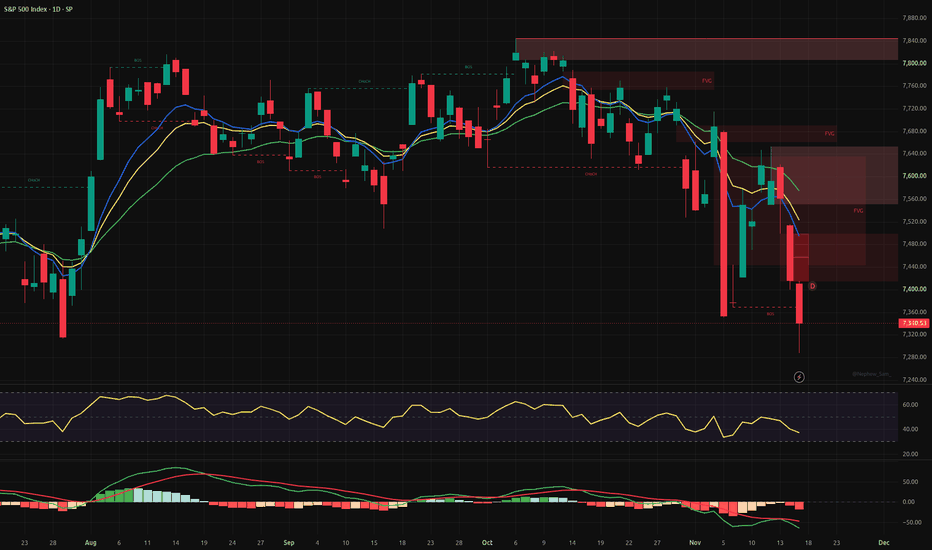
US shares closed lower on Tuesday 17 November (US time). According to Xinhua’s closing report, the Dow Jones Industrial Average fell 848.75 points, or 1.64%, to 50,759.42. The S&P 500 lost 1.03% to 7,340.53, and the Nasdaq Composite fell 0.74% to 24,328.38. All 11 S&P 500 sectors finished in the red, led by financials (down 1.87%) and utilities (down 1.6%). Energy fell least, down 0.53%.
Dow Jones Market Data, published by Morningstar, said the Nasdaq Composite has now fallen for four consecutive trading days, losing 4.47% over that run. It is 11.85% below its record close of 6 October.
One practical lesson: early Australian reports used US prices from before the final close. Stockhead’s morning table showed the Dow down 1.94% and the S&P 500 down 1.53%, while ABC’s 7am update had the Dow down 1.8%. The official closing figures were smaller. When you read a market wrap at breakfast, check whether the numbers are final.
Why stocks are falling: four pressures at once
There is rarely a single reason for a sell-off.
1. AI “buyer’s remorse”. Stockhead cited a Bank of America survey suggesting fund managers have been cutting technology stocks at the fastest pace in 20 years.
2. Bonds are real competition. Stockhead also noted that US government bonds are paying more than 5%. When a “safe” asset pays that much, investors demand more from expensive growth shares.
3. Chip restrictions and the Nvidia leadership saga. Capital Brief reported that semiconductor stocks fell after the US Commerce Department tightened restrictions on chip shipments to China. NAB, quoted by ABC, said China has warned of retaliation if those measures go ahead. Nvidia is also still dealing with the resignation of Jensen Huang as CEO.
4. Nervous headlines. ABC reported that news of a National Security Agency network outage added to nerves about US technology infrastructure. US import prices also rose 1.1% in October, a reminder that inflation pressure has not gone away.
What a VIX above 25 tells you
The Cboe Volatility Index (VIX) closed at 25.46 on 17 November, up 11.13% on the day, according to Yahoo Finance. It traded as high as 27.73 during the session, and on 11 November it had closed at 17.49.
The VIX measures how much movement S&P 500 options are pricing in over the next 30 days. It is not a forecast of direction. A reading above 25 tells you investors are paying more for protection, often ahead of a known event like a major earnings release. The same Yahoo Finance history shows a close of 28.18 on 5 November, so this is elevated but not new this month.
What Nvidia reported
Nvidia’s result arrived after the US close. According to the company’s release (filed with the SEC), revenue for the third quarter of fiscal 2027 was US$115.8 billion, up 20% on the previous quarter and 103% on a year earlier. Data centre revenue was US$107.6 billion, up 110% from a year ago. Non-GAAP earnings per share were US$2.68, and GAAP gross margin was 74.8%.
How did that compare with expectations? CNBC, citing LSEG, said analysts expected revenue of US$109.10 billion and adjusted EPS of US$2.48. So the headline was a clear beat.
The outlook mattered just as much. Nvidia guided fourth-quarter revenue of US$130.0 billion, plus or minus 3%, a quarter that includes an extra week. ABC, reporting with Reuters, said analysts had expected about US$125.25 billion (LSEG). Nvidia said its outlook assumes no data centre compute revenue from China, and it expects gross margins to ease to between 71% and 72%.
Interim CEO Colette Kress said in the release: “Our momentum is real.” CNBC reported that board chair Harvey Jones told the earnings call the board “does not intend to reinstate Jensen as CEO.”
The first reaction was positive but not euphoric. ABC reported the shares jumped about 3% in after-hours trade before settling around 1.5% higher, while CNBC had them up about 2%. ABC also relayed a Wall Street Journal report, with Reuters, that the SEC is probing whether Nvidia violated investor disclosure laws. That is a reported probe, not a finding.
How the US sell-off reaches the ASX
The ASX has few chip makers, but it is not insulated. ABC’s close report said the S&P/ASX 200 fell 1.8% to 8,883 points on Tuesday and had lost 2.7% over five days. Only 24 stocks rose, while 171 fell. Materials were the weakest sector, down 3.8%.
This morning, Capital Brief (updated 7:40am AEDT) had ASX futures down 64 points to 8,860. Motley Fool Australia said futures pointed to a fall of 66 points, or 0.75%, at the open. These are indications only, and the open can differ.
There are three main channels:
– Sentiment. When US investors sell risk, global funds often trim Australian shares too.
– Commodities. Our market is heavy in miners. Stockhead had copper down 0.55% overnight, and materials led Tuesday’s losses.
– Currency. Capital Brief had the Australian dollar at 67.33 US cents. For Australians with unhedged US shares, the exchange rate can soften or deepen a US price move in A$ terms.
Local data matters too. The ABS releases the September quarter Wage Price Index at 11:30am AEDT today, which can shift interest rate expectations and the Aussie dollar.
How I approach a sell-off week
– Separate the noise from your plan. A four-day slide feels dramatic, but your time horizon should drive decisions, not the overnight headline.
– Check your exposure. Know how much of your portfolio sits in US tech and AI themes through ETFs, super and direct shares.
– Expect gaps. Results and data releases can move prices sharply at the open. Size positions with that in mind.
– Use final numbers. Compare breakfast reports with official closing figures before drawing conclusions.
– Remember volatility works both ways. High-VIX periods can bring sharp rebounds as well as falls.
Frequently asked questions
Why are stocks falling this week?
Several pressures are combining: fund managers cutting tech exposure, US bonds paying more than 5%, tighter US chip restrictions on China, and nervous headlines, including Nvidia’s leadership change.
What does a VIX of 25 mean?
It means S&P 500 options are pricing in larger-than-usual swings over the next 30 days. It measures expected volatility, not direction, and it is not a prediction.
Did Nvidia beat expectations?
Yes, on the headline numbers. Revenue of US$115.8 billion and adjusted EPS of US$2.68 were above LSEG consensus, and fourth-quarter guidance of US$130 billion was also above estimates.
Why does Wall Street affect the ASX?
Global investors move money across markets based on risk appetite. A weak US session often shows up in ASX futures before the local open, and commodity prices and the Australian dollar spread the effect further.
Should I sell during a market fall?
I can’t give personal advice. Many long-term investors review their plan rather than react to one week. Consider speaking with a licensed financial adviser.
Disclaimer: This article is general information only, not financial advice. It does not consider your objectives, financial situation or needs. Past performance is not a reliable indicator of future performance.
Sources: Nvidia Q3 FY2027 results release (SEC filing); CNBC; Yahoo Finance; ABC News; Xinhua; Dow Jones Market Data via Morningstar; Stockhead; Capital Brief; Motley Fool Australia.
#StockMarket #WallStreet #ASX200 #VIX #Nvidia #NvidiaEarnings #ASX #AustralianInvestors